

Mini Dental Implants vs Standard: Squamish Comparison
Table of Contents
- Mini Dental Implants vs Standard in Squamish, British Columbia
- Understanding Mini and Standard Dental Implants
- Benefits of Mini and Standard Dental Implants
- How Mini and Standard Implants Are Placed
- Choosing Between Mini and Standard Dental Implants
- Your Path to the Right Dental Implant
Mini Dental Implants vs Standard in Squamish, British Columbia
When considering tooth replacement, understanding the difference between mini dental implants vs standard options is an important first step. At Parkside Dental Group in Squamish, British Columbia, we offer both solutions, helping you choose the path that best fits your unique smile. Our team will walk you through how dental implants work, ensuring you feel informed and confident from the very start.
Mini dental implants have a significantly smaller diameter, typically under 3mm, whereas standard implants range from about 3mm to 6mm in width. Because of their slim design, mini implants are frequently used to stabilize a lower denture or to fit into areas where the jawbone has naturally narrowed. Standard implants, by contrast, provide a robust foundation for single crowns, bridges, and larger overdentures, making them a versatile choice for more extensive restorations.
The surgical approach for mini versus standard implants also differs. Mini implants generally require a less invasive procedure with a shorter healing window, often allowing for same-day function. Standard implants rely on a biological process called osseointegration that takes several months to fully fuse the post with your jawbone, creating a long-term anchor. Both methods are effective, and the right choice depends on factors like your bone density and specific treatment goals.
While mini implants are often more budget-friendly, we believe in transparent pricing and will provide a clear breakdown during your private consultation. Similarly, the longevity of your restoration depends on good home care and regular checkups, regardless of the chosen system.
At Parkside Dental Group, we treat each patient as we would our own family, delivering personalized dental solutions all under one roof. Whether a mini implant or a traditional post is more suitable, you can explore every option right here in Squamish, British Columbia. We invite you to meet with us so we can design a plan that brings back both your smile and your confidence.
Understanding Mini and Standard Dental Implants
When considering tooth replacement, it’s helpful to understand that there are two main types to choose from: mini dental implants vs standard. Each option offers distinct characteristics that make it more suitable for different situations, and our team at Parkside Dental Group is here to help you navigate these choices with clarity and confidence.
What Are Mini Dental Implants?
Mini dental implants are a slender, less invasive tooth replacement option characterized by a diameter of less than 3.0 mm. Unlike their larger counterparts, these implants typically feature a one-piece construction, meaning the implant post and the abutment connector are crafted as a single, solid unit. One type of dental implants we offer is the mini implant, which is particularly valuable for patients seeking a more conservative solution.
Because of their smaller size, mini implants often require less bone volume for successful placement. The procedure itself is generally minimally invasive, frequently allowing for immediate loading in suitable cases and involving a shorter overall treatment timeline. These characteristics make mini implants commonly used for stabilizing lower dentures, replacing smaller teeth, or addressing gaps in areas where bone density is reduced. We believe in personalized dental solutions, and for many individuals, this approach provides effective stability with a gentler surgical experience.
What Are Standard Dental Implants?
Standard dental implants are the traditional benchmark in modern tooth replacement, defined by a diameter of 3.5 mm or more. They feature a multi-piece design, typically consisting of three separate components: a titanium implant post that serves as an artificial root, a connecting abutment, and a custom-crafted restoration such as a crown, bridge, or denture. This time-tested, modular construction provides exceptional versatility and strength.
Due to their robust structure, standard implants are ideally suited for handling high load-bearing forces, making them the preferred choice for replacing larger molar teeth or anchoring full-arch restorations. The surgical process is staged, allowing for a healing period of several months where the implant post fuses with the jawbone through a process called osseointegration. According to the Canadian Dental Association, this biological bonding is key to an implant’s long-term stability. Whether supporting a single crown or an implant-supported bridge, conventional implants remain the gold standard for recreating the full function and feel of natural teeth.
Key Differences at a Glance
When evaluating tooth replacement options, a direct comparison highlights the main decision factors between these two designs:
- Size: Mini implants have a diameter of less than 3.0 mm, while standard implants measure 3.5 mm or more in diameter.
- Design: Mini implants use a one-piece construction where the post and abutment are a single unit. Standard implants use a multi-piece design with separate post, abutment, and crown.
- Surgical Approach: Mini implants are typically placed with a minimally invasive, flapless procedure and often have a shorter healing period. Standard implants involve a staged surgical approach with a longer osseointegration period.
- Primary Use Cases: Mini implants are commonly used for stabilizing lower dentures or for smaller gaps and areas with limited bone. Standard implants are best for single-tooth replacements, multi-tooth bridges, and situations requiring maximum chewing force.
The right choice ultimately depends on your unique anatomy, bone health, and personal treatment goals. In our Squamish clinic, we take the time to understand your needs so we can recommend an approach that feels right for you.
Benefits of Mini and Standard Dental Implants
The decision between mini dental implants vs standard can shape your comfort, budget, and long-term smile health. At Parkside Dental Group, we help you understand each option’s unique benefits so you can make an informed choice.
Benefits of Mini Dental Implants
Mini implants are a minimally invasive solution that many of our Squamish patients appreciate. Because these implants are narrower, typically under 3 mm in diameter, they can often be placed without bone grafting even when the jaw has experienced some deterioration. This translates to a more comfortable procedure, often completed in a single appointment, with reduced healing time and lower upfront costs compared to standard implants. The smaller size causes less disruption to surrounding tissues, leading to a gentler recovery and minimal post-operative discomfort. Our practice’s experience confirms that mini implants are especially well-suited for stabilizing lower dentures or replacing smaller teeth. In select cases, we can even provide immediate loading, meaning you leave our office with a functional restoration the same day. For individuals who were told they lack sufficient bone for traditional implants, mini implants frequently open the door to a fixed, confident smile.
Benefits of Standard Dental Implants
Standard dental implants, typically 3.5 mm or wider, offer exceptional strength and proven longevity. Their larger titanium surface area encourages robust osseointegration, the biological fusion of implant and bone, which makes them ideal for withstanding the heavy chewing forces of molars and full-arch restorations. Our implant resources at Parkside Dental Group explain that with proper hygiene and routine checkups, standard implants can last well beyond 15 years, often serving patients for decades. This durability translates into a lower lifetime revision rate, making them a wise investment for healthy candidates. Additionally, standard implants offer unparalleled versatility: from single-tooth gaps to complex, implant-supported bridges and dentures, they can be customized to meet diverse treatment goals. For patients who prioritize maximum stability and long-term predictability, standard implants consistently deliver outstanding results.
Which Option Offers Better Value?
When weighing mini dental implants vs standard, value is about more than the initial price tag. Consider your long-term goals: for a patient with healthy bone density who wants a lifelong solution and maximum chewing power, standard implants typically offer better long-term cost-effectiveness because they avoid the possibility of earlier replacement. On the other hand, someone with reduced bone volume or a tighter budget might find that mini implants provide a functional, aesthetically pleasing result at a lower entry cost, and without the need for grafting or extended healing. At Parkside Dental Group, we treat each patient as we would our own family, so we never push a one-size-fits-all answer. Our team listens carefully to your concerns and lifestyle before guiding you toward the implant type that truly matches your needs. And because we offer both mini and standard implants all under one roof, you can explore every option with a single, trusted provider. Understanding these benefits helps you move to the next step: learning about the procedure and recovery for each implant type.
How Mini and Standard Implants Are Placed
Now that we’ve explored mini dental implants vs standard in general, let’s walk through how each is placed at our clinic. At Parkside Dental Group, we believe in complete dental care that keeps you informed every step of the way. The procedures differ considerably, and understanding the steps helps you feel confident about your choice.
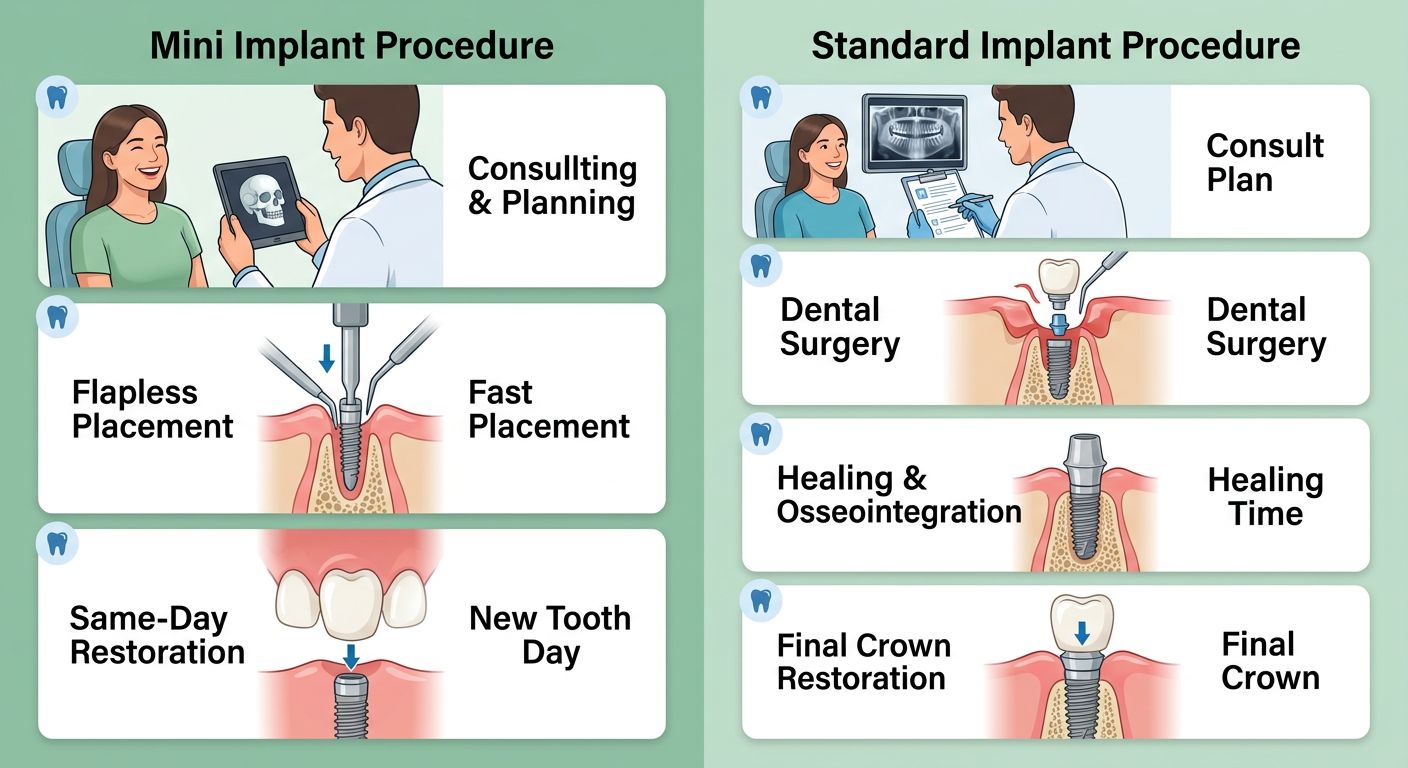
Side-by-side comparison of mini and standard dental implant procedures
The Mini Implant Procedure Step by Step
Mini implant placement is a single-stage, minimally invasive process that we often perform using a flapless technique. After numbing the area with local anesthesia, a small pilot hole is precisely created through the gum tissue without large incisions or sutures. The slender titanium post is then gently threaded into the jawbone, and in many cases we can attach a temporary restoration on the same day, offering immediate loading potential. Most patients find the experience surprisingly comfortable, and because the procedure avoids extensive surgery, recovery time is typically measured in days rather than weeks. At Parkside, we treat each patient as we would our own family, so we will carefully evaluate your bone quality and oral health before recommending this quick option.
The Standard Implant Procedure Step by Step
Standard dental implant placement is a multi-stage process designed to build a strong foundation for long-term function. The first surgery involves creating a small incision in the gum to expose the jawbone before precisely embedding the titanium implant. We use 3D CBCT imaging beforehand to map the ideal position, ensuring predictable results. After the implant is placed, the gum is sutured and a healing cap or temporary restoration may be fitted while osseointegration occurs. This biological fusion of implant to bone typically requires a healing period of three to six months. Once the integration is confirmed, a second minor procedure exposes the implant and attaches an abutment, which serves as the connector for your custom-crafted crown or bridge. Impressions are taken, and the final restoration is delivered a few weeks later, completing your new smile.
Recovery and Treatment Timelines Compared
When comparing mini dental implants vs standard at our Squamish clinic, the differences in recovery stand out. With mini implants, most patients return to normal activities within a day or two, and the entire treatment can often be finished in as little as one to two visits over a few weeks. Because standard implants involve more extensive surgery and a prolonged osseointegration period, the timeline typically stretches to four to six months or longer, especially if bone grafting is needed. During that time, a temporary tooth replacement keeps your smile functional. Mini implants are often used to support dentures more securely, reducing slipping and boosting confidence, and their quicker recovery appeals to many patients. Every case is unique, so we develop personalized dental solutions that weigh factors like bone density, healing capacity, and your lifestyle. With both options available all under one roof, you can receive the guidance you need without having to visit multiple offices.
The right choice also affects the overall investment – in the next section we’ll look at how costs compare.
Choosing Between Mini and Standard Dental Implants
When considering mini dental implants vs standard options, it helps to review candidacy factors so you can make an informed choice. At Parkside Dental Group, we provide personalized dental solutions that match your unique oral health needs, and understanding the key differences is the first step.
Candidacy Checklist for Mini Implants
- Have lower bone density – mini implants often do not require bone grafting and can be placed in narrower ridges.
- Prefer a less invasive procedure – placement is typically flapless and involves minimal discomfort and shorter recovery.
- Need denture stabilization – mini implants are excellent for securing lower implant-supported dentures and improving chewing comfort.
- Seek a limited budget solution – mini implants generally have a lower upfront cost while still providing reliable function.
Our team will evaluate your oral health and discuss whether mini implants are a suitable path for you.
Candidacy Checklist for Standard Implants
- Have sufficient bone height and width – though bone grafting can be performed if needed, adequate natural bone supports predictable outcomes.
- Require single-tooth replacements – standard implants excel at replacing individual teeth with a natural-looking crown.
- Value long-term durability above all – with proper care, standard implants are designed to serve as a permanent tooth replacement.
- Need full-arch restorations – multiple implants can anchor a complete bridge or denture for comprehensive smile rehabilitation.
During your consultation, we will assess your bone structure and overall goals to determine if standard implants offer the best value for your smile.
Common Questions Answered
Are mini implants less invasive?
Yes, the placement of mini implants is typically flapless and involves a shorter procedure with minimal recovery time compared to standard implant surgery.
How long do they last?
According to the Canadian Dental Association, both mini and standard implants have high success rates when placed by experienced professionals. While longevity varies, many patients enjoy their implants for many years with consistent oral hygiene and routine dental visits.
Can mini implants support dentures?
Absolutely. Mini implants are frequently used to stabilize lower dentures, reducing movement and improving confidence while eating and speaking.
What is the cost difference in British Columbia?
Mini implants typically involve a lower upfront cost than standard implants. At Parkside Dental Group, we practice transparent pricing and will explain all fees clearly so you can choose what fits your budget.
Ready to explore which implant option is right for you? Contact our Squamish clinic to schedule your free consultation.
Your Path to the Right Dental Implant
Choosing the right implant starts with understanding the mini dental implants vs standard options available. Mini dental implants are smaller-diameter posts, often used to stabilize dentures or replace a single tooth when space is limited. Standard dental implants are full-diameter posts suited for most single, multi-tooth, and full-arch restorations, offering robust, long-term support. While mini vs standard dental implant options share the same foundation of osseointegration—fusing with your jawbone for stability—their applications differ based on your unique needs.
Several factors guide this decision, and it’s never a one-size-fits-all answer. Bone density, the number of missing teeth, your overall health, and aesthetic priorities all play a role. At Parkside Dental Group, we offer both mini versus standard implants under one roof, ensuring your care is truly personalized. Our team can assess whether a smaller-diameter solution suits a narrow space or if a full-diameter implant provides the lasting load-bearing capacity your restoration demands.
We believe in treating each patient as we would our own family, which is why the final choice depends on your individual anatomy and treatment goals—not a generic protocol. We invite you to schedule a consultation at Parkside Dental Group for a balanced, professional recommendation tailored to your smile.
Resources
- Get Expert Denture Care Guidance from Parkside Dental
- Discover Dental Implants and Their Long-Term Benefits
- Learn About Dental Implant Procedures and Success Rates
- Get Dental Implant Cost and Insurance Coverage Details
- Compare Dental Implants and Dentures for Tooth Replacement
- Get Dental Implant Coverage Under Canada Dental Care Plan
- Get Dental Implant Cost Information for British Columbia
- Explore Canadian Dental Association Resources and Programs


