

How to Fix Loose Dentures: Practical Solutions for a Better Fit
Table of Contents
Loose Dentures and What You Can Do About Them
People often look up information about how to fix loose dentures since sliding dentures can hinder routine tasks and self-confidence. Many cases can be corrected simply through a doctor’s examination and adjustment or relining so they fit more comfortably. When wearing dentures, eating and talking becomes easier.
We understand what a problem it is when dentures start to move around inside the mouth, but we want you to feel reassured that this isn’t at all unusual, and that something can be done about it if necessary. It may occur as the mouth naturally changes shape over time, or because some parts of your denture have worn down. We’ll work together on making improvements to your existing dentures so they sit more comfortably once again.
This article explains what causes dentures to loosen and how they can be fixed so they sit comfortably again.
Key Takeaways
- Although you may have felt that your dentures were sitting comfortably inside your mouth, they can start to feel less secure over months and years.
- Take notice if your dentures change in the way they fit throughout the day.
- When you go back for fitting at Squamish, be sure that your dentures are cleaned thoroughly prior to putting on any type of fixative.
- Make sure you clean your dentures and gums well before applying adhesive; doing so correctly keeps your dentures secure without overuse.
- Even if you’ve applied the best denture adhesives available, they’re just that, temporaries.
Before You Begin: Why Dentures Loosen Over Time
Although you may have felt that your dentures were sitting comfortably inside your mouth, they can start to feel less secure over months and years. That’s not a defect in the dentures — it’s due to natural changes in your mouth over time.
Teeth extraction causes changes in both your gums and jawbones, as they tend to take on a different appearance with time. With time, your jaw gets smaller and flatter, making it harder to keep your denture fitted well. Your daily activities such as talking, chewing, eating, moving facial muscles and so forth, may all cause gradual loosening of your denture.
A loose denture isn’t uncommon at all, and many denture-wearing patients in Squamish experience this. Luckily, there are ways our dentists can deal with your loose denture, although we can’t provide any assurances or guarantees, only sound advice based on patient care experiences.
Take a moment to notice how your denture feels today. Is it sitting differently than it used to? That simple observation is often the first step toward finding a comfortable solution.
Step 1: Assess the Fit
Take notice if your dentures change in the way they fit throughout the day. If your dentures slide out when you’re eating or talking, make a clicking noise, cause pain on your gums, or even use extra glue, there may be problems. These are all signs the fit has shifted and needs attention.
Do a self-check now by biting down lightly and run a finger around all edge areas to see if there’s any loose play in the fit of either appliance. Pay special attention to whether this slackness stays constant while eating or is just on occasions. Does it affect the upper or lower teeth, or both? Sometimes, small movements occur daily due to wear on your denture base, or changes in your mouth and gum tissue.
If that fits okay, clean off both the dentures as well as the mouth itself prior to thinking about using any retainer products or adhesives. This will keep everything neat and tidy, also enabling you to think about what type of remedy to make use of at this time.
Step 2: Clean Thoroughly
When you go back for fitting at Squamish, be sure that your dentures are cleaned thoroughly prior to putting on any type of fixative. Cleaning the surfaces of your teeth will help the fixative adhere more effectively without getting blocked off by food particles or dental plaque.
Here’s how we recommend doing it safely:
- Fill the sink with a few inches of water or place a folded towel underneath to cushion the denture if it slips.
- Use a soft-bristled brush and a non-abrasive cleaner to gently scrub every surface of the denture, paying attention to clasps and grooves.
- Rinse your denture well under running water to remove all traces of cleaner.
- While the denture is out, brush your gums, palate, and any remaining teeth to remove plaque and keep the tissue healthy.
If they never feel clean no matter what care you take in cleaning them, have them checked professionally.
Step 3: Use Adhesive Safely
Make sure you clean your dentures and gums well before applying adhesive; doing so correctly keeps your dentures secure without overuse. Use only two or three short strips, about 6 mm each, once per day, as advised by Health Canada. A 50-gram tube should last four to six weeks when used this way; if yours runs out sooner, your dentures may not fit properly.
Prolonged, excessive use of zinc-containing adhesives has been linked to symptoms such as numbness, tingling, weakness in the limbs, balance problems, and even anemia. If you’ve been using more adhesive than directed for years, stop and speak with your doctor. Most manufacturers now offer zinc-free versions, so check labels before buying.
If you think you will need more adhesive to get through the day, ask us about a professional fit check—your comfort and safety come first.
Step 4: Rest Your Gums
Even if you’ve applied the best denture adhesives available, they’re just that, temporaries. That means giving your gum tissue a break each day can make a loose fit feel more comfortable right away. Taking your dentures out allows your alveolar ridges to recover from the daily pressure and rub they endure – easing irritation and giving your mouth some breathing room.
We recommend choosing a quiet time at home when you feel relaxed without your denture, and rinsing your mouth gently with lukewarm water to keep things fresh. While your gums rest, give your denture a quick clean so it’s fresh when you put it back in later.
Resting will calm the tissue, but it won’t restore a worn or altered fit. If sore spots, swelling, or pain linger after a few days, let your dental team take a look — they’ll help you move forward with the right solution.
Step 5: Request a Professional Reline or Rebase
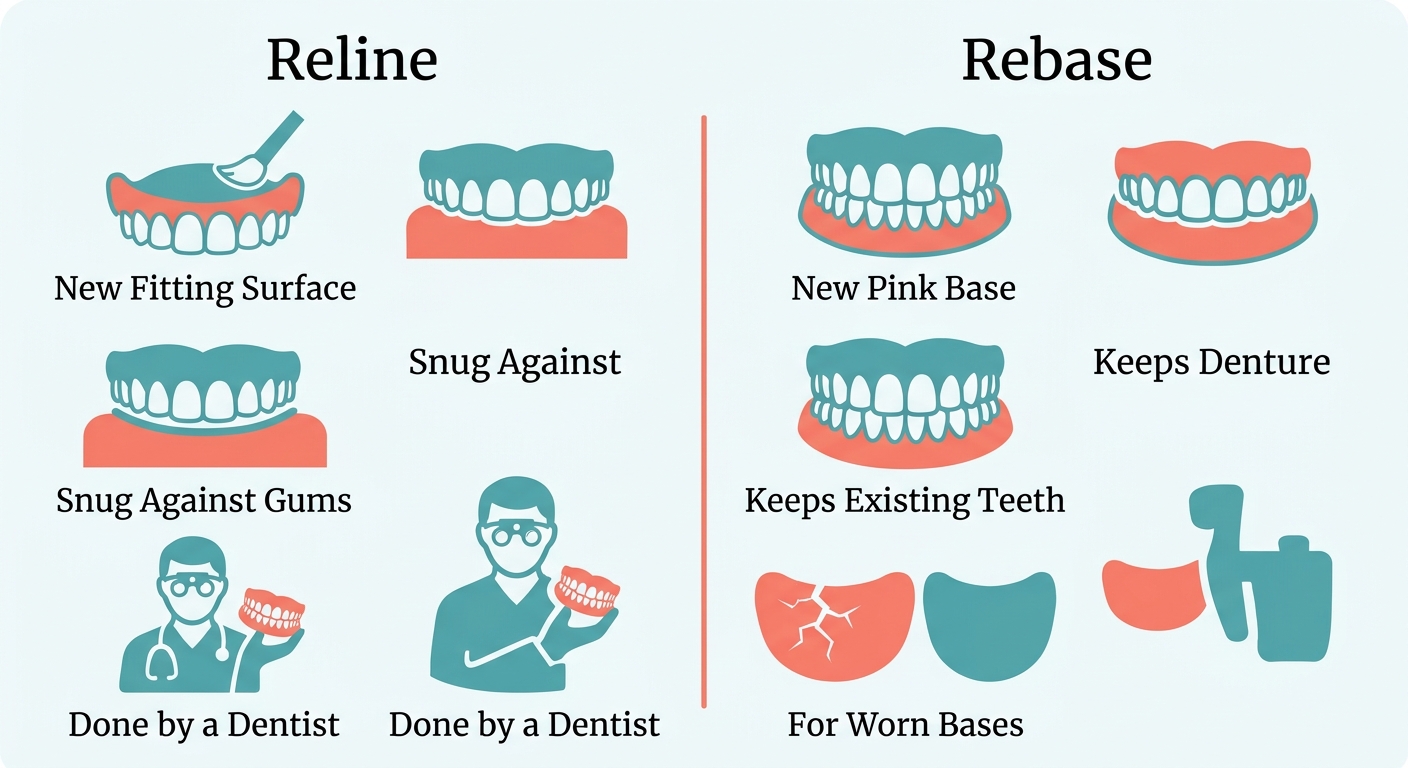
The next step toward fitting comfortably, now that your gums have been given a break from Step 4, is having the denture professionally refitted. A reline will resurface the bottom of the denture with new material so it can again sit snugly on your gums.
In case your denture’s pink acrylic base has become cracked, brittle, scratched or otherwise damaged in some way, the entire base will be removed and replaced. However, if there’s still life left in your original false teeth, they’ll stay put during this procedure. Sometimes your gums, mouth bones, or the space under your gums changes over time and causes your false tooth to slip out of its usual place. This problem requires either relining your appliance with new material or re-basing the whole thing.
Your dentist will help decide if this type of reline or rebase is needed for your ongoing denture care.
Step 6: Consider Implant-Supported Dentures
Even if you’ve had a denture relined or rebased, sometimes the denture is still loose. When suction and adhesives don’t work for you any more, there may be another option called implant-retained dentures. These dentures fit onto screws implanted into your jaws, which give them much better retention than regular dentures and make them feel more like your own teeth.
At Parkside Dental Group in Squamish, British Columbia, we offer implant-supported dentures alongside traditional options, so you can explore both paths in one place. We’ll sit down together to assess your needs and discuss whether this approach could be right for you. Many patients find this option worth considering once conventional solutions no longer meet their comfort and function needs.
Step 7: Book a Personalized Consultation
When we’ve talked about everything you can do with loose dentures, it makes sense for us to arrange an on-site evaluation at the dental office in Squamish called Parkside Dental Group. Once there, your dentist can see how your current partials fit, what should be done, which may include placing implants depending on your oral health and budget.
During your consultation, we’ll provide honest, transparent recommendations without any pressure to commit. You can find us at our downtown Squamish office on the corner of Victoria Street & 2nd Avenue, or call us Monday through Friday between 8:30 AM and 5:00 PM. We also handle insurance billing directly for your convenience, so you can focus on your comfort and care.
Schedule your complimentary appointment now. Let our team help guide you through your move confidently.
Troubleshooting Common Loose Denture Problems
If you’re wondering how to fix loose dentures without making matters any worse, a few telltale signs often appear first and usually point to an underlying fit issue that extra adhesive alone won’t resolve. Often these include slipping while eating or speaking, clicking noises as your dentures slide around, soreness at the gumline, or having to apply adhesive all over again more than once per day. It would be easy enough to dismiss them if they weren’t already indicators for what could otherwise turn out to be a major problem in the future.
Try these simple steps before seeking professional help. First, take out your dentures and carefully clean them to clear away any old glue residue and leftover particles. Look for any damage including cracks in the material or missing teeth, as this may cause instability. When you start to feel pain even though everything has been cleaned correctly for a couple of days, look into making another adjustment instead of slathering on extra goo.
Beware: Health Canada warns that long-term, excessive use of zinc-containing adhesives has been associated with serious neurological symptoms like numbness, tingling, weakness, balance difficulties, and even blood disorders such as anemia. Apply glue no more than once a day, using only two or three short, quarter-inch strips to minimize risks.
Loose dentures, even when properly cared for, still benefit from the skills of a professional when the goal is full security. By measuring and testing your teeth, making fine adjustments as needed, or suggesting measures such as relining, repairs, or implant-retained dentures, we can achieve improved fit, increased comfort and lasting results. To obtain a long-term solution, all you need to do is call our office, and we will assist you in regaining confidence in your smile once again.
Frequently Asked Questions
Is it safe to use denture adhesive to fix loose dentures at home?
Denture adhesive should be used temporarily and sparingly. Health Canada advises applying only two or three short strips once per day. Excessive long-term use of zinc-containing adhesives has been linked to neurological symptoms and blood disorders.
What are the professional options for repairing loose dentures such as relining or rebasing?
A reline resurfaces the denture base to fit current gum contours, while a rebase replaces the entire pink acrylic base but keeps the existing teeth. Both procedures restore fit without making a whole new set.
When should I consider dental implants as a permanent solution for loose dentures?
Dental implants anchor dentures to titanium posts in the jawbone, providing stability similar to natural teeth. They are considered when conventional dentures no longer meet comfort or function needs.
Can a Dentist Fix Loose Dentures without Making a Whole New Set?
Yes. Dentists can often restore fit through adjustments, relining, or rebasing existing dentures. These methods preserve the original teeth and base while improving comfort and stability.
Why do my Dentures Feel Loose Even if They Fit Well Before?
Dentures may feel loose over time due to natural changes in the jawbone and gums after tooth loss. Daily activities like chewing and speaking can gradually alter the fit, requiring professional adjustment.
A Stable, Comfortable Fit Is Within Reach
Don’t let a wobbly denture make life less easy. Today’s dentistry offers real solutions, and we can help you regain confidence in your smile. It may be as simple as being remade or relined. Or implant-supported dentures may be an option.
We see firsthand how these adjustments transform daily life, turning frustration into comfort. So if you have been wondering*how to fix loose dentures, *you need a dental assessment so that we can give you the best option for yourself. Options range from simple relines to fully supported implant-based teeth in Squamish.
If there’s something you need help with at Parkside Dental Group in Squamish call our office now on (604) 892-5966 to schedule an appointment. Call us today at (604) 892-5966 to book your appointment and take the first step toward a secure, comfortable fit.
Book Your Denture Fit Consultation
Now that you’ve worked through assessing the fit, safe adhesive use, and when a reline or rebase makes sense, the natural next step is a personalized consultation. Our team at Parkside Dental Group can examine how your denture is sitting and match the options from this guide to your mouth and goals. Free consultations are available for some services, and we bill insurance directly for your convenience. You’ll receive honest, transparent recommendations rather than a sales pitch. We’re located downtown in Squamish, BC, at the corner of Victoria Street & 2nd Avenue, and reception is open Monday through Friday, 8:30 AM–5:00 PM. Call us at (604) 892-5966 or email reception@parksidedentalgroup.ca to arrange your visit. A stable, comfortable fit could be closer than you think.
Book Your Denture Fit Consultation


