

Biocompatible Dental Materials: A Complete Guide for Patients
Table of Contents
- Why Biocompatible Dental Materials Matter for Your Family
- What Dental Crowns, Bridges, and Fillings Are Made From
- How Biocompatible Materials Support Lifelong Oral Health
- From Consultation to Final Restoration: How Materials Are Placed
- Choosing the Right Material for Your Health, Lifestyle, and Budget
- Your Next Step Toward Healthier, Biocompatible Smiles
Why Biocompatible Dental Materials Matter for Your Family
When you or someone else needs fillings, crowns, or bridges in Squamish, these restorations last many years, so the materials we use inside them matter. We use biocompatible dental materials because they are designed to work safely alongside your natural tooth tissue and gums, reducing the chance of irritation or sensitivity for every member of your family.
Biocompatibility simply means these materials are well tolerated by the body, minimizing the risk of adverse reactions while supporting long-term oral health. For families, this is especially important because children’s developing teeth and sensitive systems benefit from gentle, non-toxic options that align with their growing bodies. At Parkside Dental Group, we treat each patient as we would our own family, prioritizing materials that support not just your smile today, but your overall well-being for years to come. This patient-first approach naturally leads us to explore what crowns, bridges, and fillings are actually made from next.
Key Takeaways
- What are these fillings, crowns and bridges made out of?
- When choosing materials for your dental restoration, you need to consider more than their strength and appearance because they are in contact with your body every day.
- We guide patients step by step through placing biocompatible dental materials that restore both function and confidence.
- Selecting the right restorative material is about balancing how biocompatible dental materials perform in your mouth, how they fit your daily life, and what your budget can support.
- Choosing biocompatible dental materials for your smile is a personal decision that balances your health, lifestyle, and budget.
What Dental Crowns, Bridges, and Fillings Are Made From
What are these fillings, crowns and bridges made out of? Parkside Dental Group sees people in Squamish and across the Sea-to-Sky corridor choosing materials designed to blend seamlessly with natural teeth while supporting long-term oral health.
Composite Resin and BPA-Free Fillings
Composite resin is a tooth-colored material made from a blend of fine glass and plastic particles. Because it matches the shade of your existing teeth, it’s the most popular filling choice for families who want restorations that look natural. Unlike older metal fillings, mercury-free composite fillings are now the default choice for most families in Squamish, offering a conservative approach that preserves more healthy tooth structure.
The filling process itself is straightforward. After examining the tooth, we numb the area, remove any decay, place the resin in layers, and harden it with a special curing light. We then shape and polish the surface so it feels smooth and comfortable. Proper technique matters: thorough rinsing, rubber dam isolation, and optimal light-curing help minimize any trace residuals.
Some parents wonder if BPA in dental resin fillings should concern them. Although BPA is not directly mixed into these fillings, it is a trace byproduct of Bis-GMA. Thankfully, any exposure to BPA through properly cured composite fillings is relatively low level, as well as temporary, often reverting back to normal levels within 24 to 48 hours. Diet remains the bigger source of BPA for most people, so we focus on clinical best practices to keep exposure minimal.
Porcelain, Zirconia, and Other Crown Materials
For crowns and bridges, layered porcelain remains the gold standard for natural-looking results. Its translucent layers mimic the way light passes through real enamel, making it a top choice for front teeth where appearance matters most.
Another choice is high-strength zirconia, which offers great durability and a tooth-colored appearance so it can be placed on both front and back teeth. There is also ceramic, a fully tooth-colored alternative, offering a balance of aesthetics and strength for patients who prefer all-white restorations.
Gold has stood the test of time as a traditional crown material, prized for its strength and longevity. While it doesn’t blend with natural teeth, many patients choose it for its proven performance in high-stress areas like molars. Each material has its strengths, and we help our patients in Squamish select the one that best fits their needs and lifestyle.
It would be easier if we knew what materials they were made from, because selecting appropriately helps keep teeth healthy and boosts confidence when smiling for a lifetime.
How Biocompatible Materials Support Lifelong Oral Health
When choosing materials for your dental restoration, you need to consider more than their strength and appearance because they are in contact with your body every day. Biocompatible dental materials such as ceramic, composite resin and zirconia are produced to work in close harmony with your oral surroundings, helping to minimize irritation and support long-term comfort.
Lower Allergy and Sensitivity Risk
Some people have allergic reactions to dental bridge materials, though this does not often occur. However, it can if you already suffer from a metal allergy or sensitivity. This is why our team will review your medical background and talk about material alternatives prior to beginning therapy. We may opt for ceramic, composite resin, or zirconia since these rarely cause adverse reactions and therefore allow your gum and oral tissues to stay healthy for years.
They stay in our mouths for years, in constant contact with gum tissue and saliva. The more well-tolerated a specific material proves itself to be, the less likely it will irritate surrounding tissues, and the more it will support comfortable soft tissue, which is essential for lifelong oral health. If you have sensitivity towards metal materials, we often recommend zirconia or ceramic options to avoid potential discomfort.
Daily care also matters. For example, a water flosser is the most effective tool for cleaning beneath a dental bridge pontic, helping prevent plaque buildup and irritation where traditional floss can struggle. When combined with regular brushing and checkups, biocompatible materials create a foundation for lasting comfort.
Aesthetics and Durability You Can Rely On
Metal-free restorations blend with your tooth’s enamel in such a way that people can’t tell you’ve had dental work done. Ceramics and zirconia crowns and bridges look like real teeth, reflecting light as their natural counterparts would. If someone examines your mouth closely enough, there won’t be anything out of place. The end result is that these appliances make your smile confident and complete.
Also known as durability: When a properly maintained dental component, like implant parts that fuse with the jawbone through osseointegration, is inserted into your jawbone, the restoration can remain stable for 15 years or longer with consistent proper oral care. Not only does this preserve your jawbone structure and prevent bone resorption, but it also prevents facial sagging that can occur when teeth are missing. In addition to keeping those natural-looking replacement parts in place, they keep other nearby teeth from suffering any unnecessary damage because traditional bridges need you to shave down otherwise sound adjacent teeth.
Strength counts. For example, single-tooth implants restore nearly 100% of natural biting force, so you can enjoy your favorite foods without worry. If cared for properly on a regular basis, including brushing, flossing, and dental visits, your restoration can last as long as possible and support both function and peace of mind.
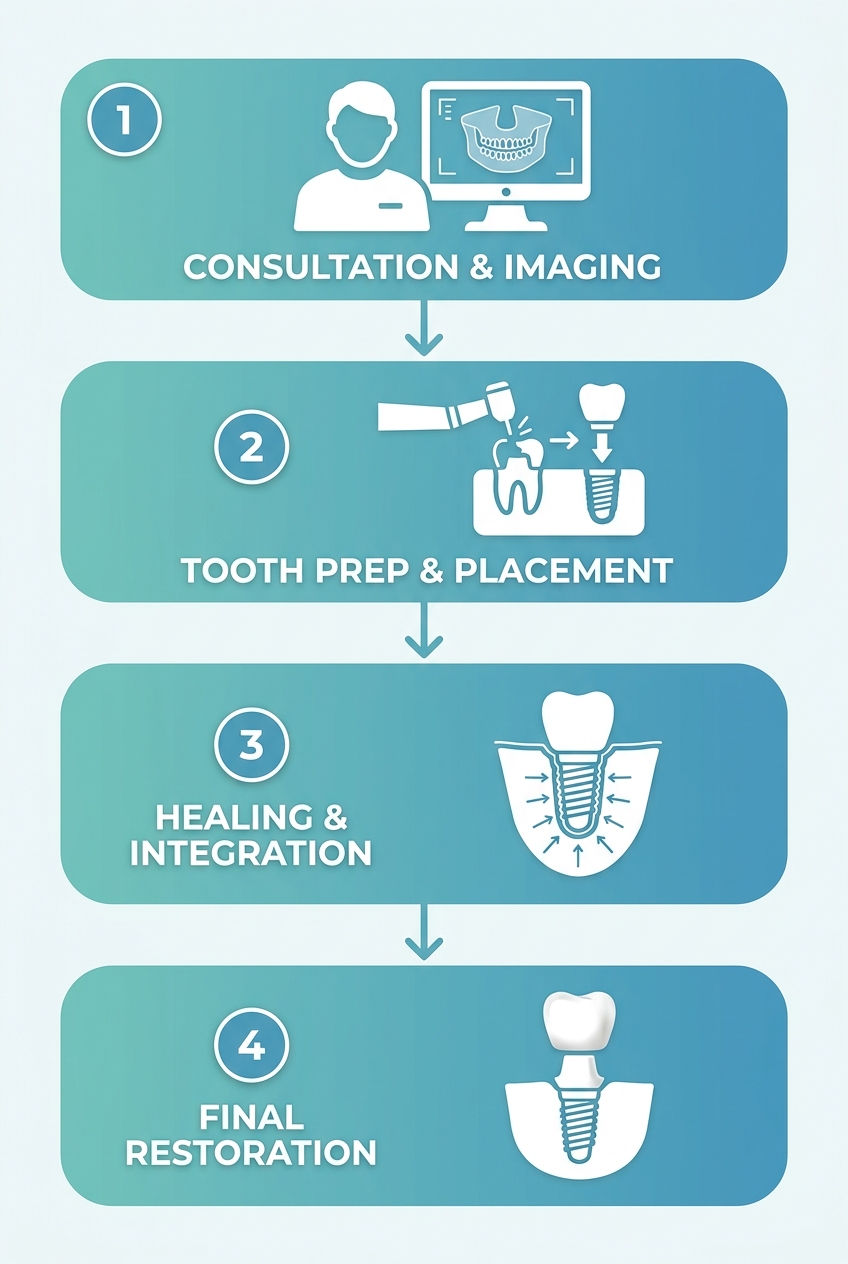
From Consultation to Final Restoration: How Materials Are Placed
We guide patients step by step through placing biocompatible dental materials that restore both function and confidence. Whether you need a simple filling or a full implant-supported restoration, our team ensures each material is placed with precision and care.
Planning and Placing Fillings, Crowns, and Bridges
To start off, we diagnose what needs to be fixed. In the case of composite fillings, we will first eliminate all that has gone bad, then make sure to choose a shade from our palette of resins that matches up seamlessly with your other teeth. As far as getting ready for a crown or bridge goes, we’ll shape the tooth in such a way that there’s plenty of room to restore it, but we won’t go overboard and take away too many pieces of its structure.
Next up is the bonding stage: here we’ll attach the tooth-colored compound in layers, shaping each application as needed to bring back its original look. The curing light makes sure each layer sticks well and quickly dries them, so that when they’re set we can move on to the last step: polishing until it shines just right and restoring your smile’s appearance. Usually all this happens over a single appointment, leaving you free to walk out and get on with life feeling more comfortable and confident about the way things have changed.
Titanium and Zirconia Implant Placement Explained
The initial part of the dental implant journey starts with a detailed consultation, including 3-D imaging to map your jawbone and plan the precise placement of the titanium post. The post is biocompatible and will act like a new tooth root, with the healing process called osseointegration, taking usually about three to six months, during which the bone fuses onto the post. During this time, your bone grows around the post, creating a stable foundation that preserves your facial structure and prevents bone loss.
When all of this has been done, we can fit the final restoration on top. This can either be a zirconia crown, which offers exceptional strength and a natural appearance, or a porcelain crown, which provides lifelike translucency. We balance these options with your oral health needs and aesthetic goals, making sure your new tooth looks and feels just like the rest of your smile.
Those who have good gum health as well as a high amount of bone in their mouth will be ideal candidates to get dental implant surgery; nonetheless, bone grafts can also help people who’ve lost bone mass because they don’t meet these requirements. According to current medical studies, implants have a success rate exceeding 95 percent and fuse securely with your bone, offering a fixed alternative to removable dentures. The implants combine properly with the jaw, making it permanent compared to non-permanent denture alternatives. We will guide you throughout each phase of the procedure from first planning steps until full restoration has been achieved.
Choosing the Right Material for Your Health, Lifestyle, and Budget
Selecting the right restorative material is about balancing how biocompatible dental materials perform in your mouth, how they fit your daily life, and what your budget can support. At our Squamish practice, we guide patients through this decision with clear information and personalized recommendations.
Bio-Emulation and the Future of Tooth Restoration
In bio-emulation, dentists design restorations that will emulate the physical properties of a patient’s own teeth, as well as their appearance. Bio-emulation has gained popularity heading up towards 2026 due to its benefits such as making restorations which look and behave just like your own teeth and that help preserve your oral health for the long run. Using advanced ceramics and high-performance composites, the dentist blends the restoration with the surrounding enamel, reducing the risk of wear on opposing teeth and preserving your natural bite mechanics. When using materials that replicate the durability of the natural tooth, restorations can stay in place much longer and patients may not even notice them.
A Practical Checklist for Your Next Restoration
Prior to your next visit, go over the following information about the restoration you will be receiving with your dentist in order to make sure that this treatment option is right for your particular needs:
- Discuss any known allergies or sensitivities to metals or resins so we can select a biocompatible option.
- Share your daily habits, such as teeth grinding or nail biting, so we can choose a material that withstands your bite forces.
- Confirm your insurance coverage, including the Canada Dental Care Plan, to understand your out-of-pocket costs before treatment begins.
- Ask about maintenance needs — some materials require more frequent polishing or adjustments than others.
This list will help you choose options when it comes time to visit the dentist for restoration treatments:
| Restoration | Common Material | Key Biocompatibility Consideration | Best Suited For |
|---|---|---|---|
| Fillings | Composite resin, amalgam, ceramic, porcelain, gold | Trace BPA residuals in resins are low-level and transient, minimized with proper curing | Small-to-moderate cavities where aesthetics matter most |
| Crowns & Bridges | Porcelain, ceramic, gold | High wear resistance and natural aesthetics matched to surrounding teeth | Teeth with larger damage or after root canal treatment |
| Implants | Titanium post with final restoration | Osseointegration preserves jawbone and avoids metal sensitivities in most patients | Single tooth replacement where 3–6 months of healing is acceptable |
| Implant-Supported Bridge | Titanium posts supporting multiple teeth | Same biocompatibility profile as single implants; ideal for replacing several adjacent missing teeth | Replacing several adjacent missing teeth with a stable, long-term solution |
You don’t want something that looks out of place in the rest of your mouth. So at our Squamish office, we’ll work with you on each option to find one that keeps you healthy and fits with your personality and financial situation.
Frequently Asked Questions
Why are dentists switching to bio-emulation in 2026?
Bio-emulation in 2026 uses advanced ceramics and high-performance composites to create restorations that mimic the appearance and physical properties of natural teeth. This approach preserves bite mechanics, reduces wear on opposing teeth, and helps restorations last longer while blending seamlessly with existing enamel.
Can i have an allergic reaction to dental bridge materials?
Yes, some people can have an allergic reaction to dental bridge materials, especially if they have a metal allergy or sensitivity. Ceramic, composite resin, or zirconia are safer alternatives that rarely cause adverse reactions and support long-term gum health.
What are the most natural-looking materials for dental crowns?
The most natural-looking materials for dental crowns are layered porcelain and zirconia. Porcelain offers lifelike translucency, while zirconia provides strength and a tooth-colored appearance suitable for both front and back teeth.
What are Bpa-free Dental Composites and Why do They Matter?
BPA-free dental composites are tooth-colored resins that minimize trace BPA residuals through proper curing techniques. They matter because any temporary exposure is low-level and returns to normal within 24 to 48 hours, reducing concerns about BPA while maintaining biocompatibility and natural aesthetics.
Are Zirconia Implants Safer than Titanium Ones?
Zirconia implants are an alternative to titanium implants and may be preferred for patients concerned about metal sensitivities. Both materials are biocompatible, but zirconia offers a metal-free option while titanium is widely used and proven with high success rates in osseointegration.
Your Next Step Toward Healthier, Biocompatible Smiles
Choosing biocompatible dental materials for your smile is a personal decision that balances your health, lifestyle, and budget. Every tooth and every patient is unique, so the best filling material isn’t one-size-fits-all — it’s the one that aligns with your oral needs and priorities.
Our team in Squamish is here to guide you through the options with honesty and transparency. We’ll listen to your concerns, explain the benefits and trade-offs, and help you make a choice you feel confident about. Ready to explore what’s right for you? Give us a call at (604) 892-5966 or stop by our office at 201-37994 2nd Avenue to start the conversation today.
Talk to Our Squamish Team
You now know what goes into modern fillings, crowns, bridges, and implants, from mercury-free composite resin to layered porcelain, zirconia, and titanium posts that fuse with the jawbone. You have also seen how the right choice depends on your health needs, daily habits, and budget, with no single material suiting everyone. A practical checklist to compare health, habits, and budget is a great starting point for a conversation about which option fits your smile. Our practice in Squamish treats each patient as we would our own family, with honest and transparent recommendations. Our team can walk you through material options, answer questions about allergies and safety, and help you plan your next step. Call us at (604) 892-5966 to book a visit at 201-37994 2nd Avenue. Healthier, biocompatible smiles begin with one friendly conversation.


