

Baby Bottle Tooth Decay Signs: Prevention Guide for Toddlers
Table of Contents
Recognizing Baby Bottle Tooth Decay Signs Early
Spotting the indicators of baby bottle tooth decay gives you the chance to take preventative measures. Baby bottle tooth decay is the term used to describe tooth decay that happens to babies and toddlers due to frequent and prolonged exposure to drinks that are high in sugar such as formula, milk and fruit juices. Initial signs of this include brown or yellow discoloration of the teeth, sore gums, persistent bad breath, and a chalky deposit along the gums.
Just as our team will treat every member of your family as we treat our own, we want you to feel confident in spotting these signs. The sooner you are able to identify these signs the more likely you will be able to avoid issues such as pain and infection, and more extensive and complicated treatments. Keeping a close eye on your children’s teeth and gums for the signs below isn’t a substitute for regular professional dental checkups; however, they will help you keep an eye on your child’s oral health.
Prepare for At-Home Baby Tooth Decay Checks
After reading about early signs of decay, you’re probably eager to set up the right system to check your baby’s teeth daily.
- Pick a well-lit spot, sunlight or a lamp, so you can spot early changes along the gum line.
- Wash your hands thoroughly before touching your baby’s mouth.
- Place baby on your lap facing the light; gently lift the upper lip with a clean finger.
- Have a damp cloth or infant toothbrush ready to wipe each tooth and the gum line.
- Time the check right after feeding when baby is calm; keep it under a minute.
- If baby resists, pause and try again later, never force it.
- Note anything unusual (spots, discoloration) to share at the next dental visit.
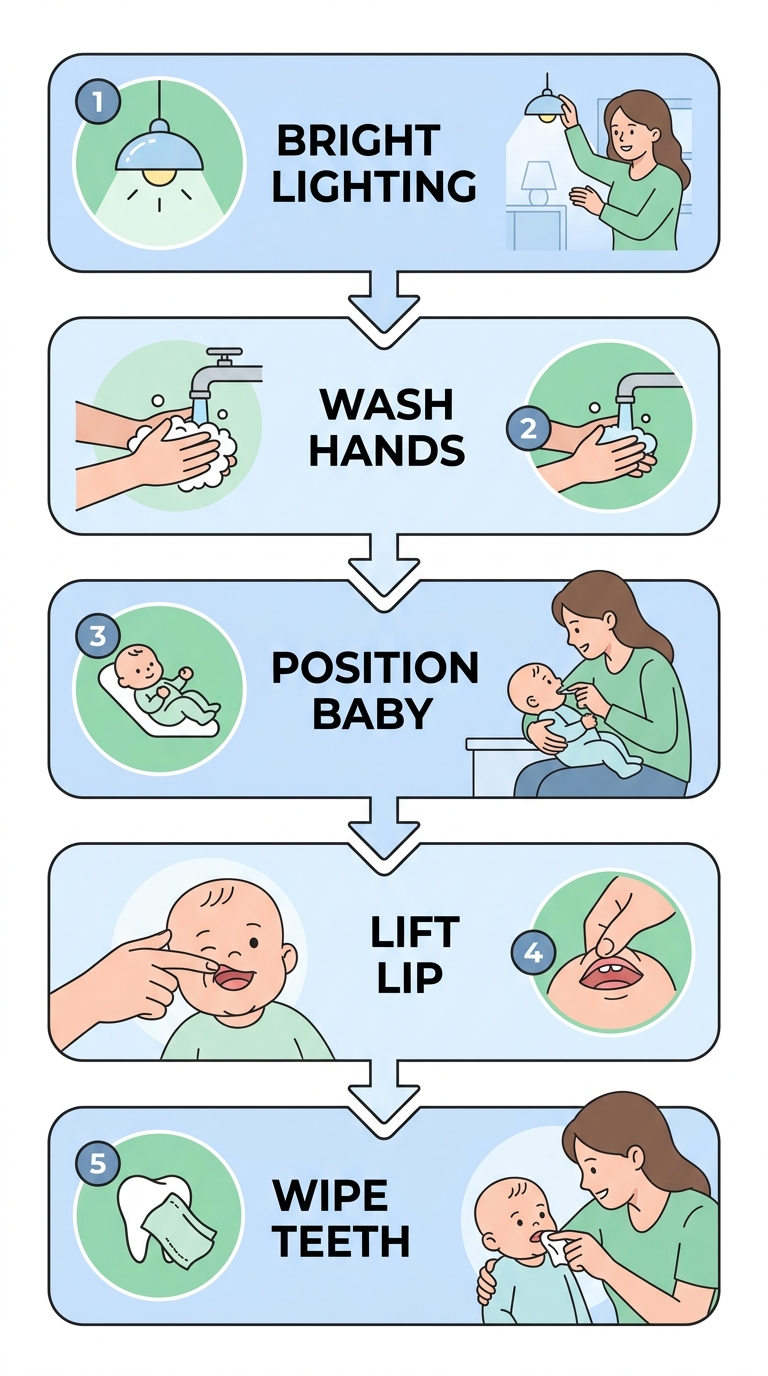
With the help of your partner or family member to give you a happy, relaxed baby to work with, you should now be able to look for white spots on the baby teeth. If you notice anything on the baby teeth that concerns you, we at Parkside Dental Group offer personalized dental solutions for families in Squamish, BC.
Identify White Spots on Baby Teeth
Now that their teeth are visible, one of the first things you should look for is chalky white spots. Chalky white spots are flat and opaque and generally don’t wipe away. They usually start along the gumline. Chalky white spots mean that tooth decay has started and it’s caused by loss of minerals along the enamel of the teeth.
Not every chalky white spot means there’s decay. Some are developmental issues or from excess fluoride, but if you see a new chalky white spot, that should be reported to your dentist to check what’s going on.
If you see a chalky white spot on your child’s tooth, bring them to the dentist in Squamish. Our team can examine the area and, if needed, apply fluoride varnish for toddlers to help strengthen early weak spots. The goal is to treat it early to reverse the loss of enamel and to keep it from turning brown or black.
Check for Brown or Black Discoloration on Front Teeth
White spots on kids’ front teeth can easily be overlooked. However, these spots can quickly turn into cavities, and the teeth can start to darken to brown or black. Decay follows the white spot, and as it gets deeper into the enamel, brown marks can appear. Sometimes brown marks are decay, but not all brown marks are decay.
To check for decay yourself, you can ask your child to hold their upper lip out and take a look at their front teeth. You can check for decay by looking along the gum line where it usually starts. If you find brown or black spots, contact us at Parkside Dental Group in Squamish. Our Squamish team provides complete dental care for local families, treating the visit as routine preventive care.
Look for Signs of Gum Swelling or Bleeding
After checking for dark spots on your baby’s upper front teeth, lift their lip and look at the gumline above those teeth.
Bleeding suggests sugar from milk, formula, and/or juice has been pooling around the teeth and irritating the gums.
Swelling from teething is very localized. Swelling from decay tracks the gums of the upper front teeth and will not resolve with the eruption of the tooth.
When you see these signs, along with any discoloration of the teeth, we recommend you have your baby evaluated by a dentist to have the teeth checked. At our clinic, we can provide an evaluation of your baby’s gums during a preventive visit and provide other preventive treatment and check-ups at our office in Squamish.
Swelling and bleeding of the gums, along with marks on the teeth, most likely means there is advanced decay of the teeth, also known as “bottle rot.”
Recognize Bottle Rot on Upper Front Teeth
Next check the upper front teeth, which are often the first teeth to show bottle rot. At our clinic, we see the first sign of bottle rot as chalky, dull, white spots or a whitish line along the gum line. They look flat and rough. The upper front teeth are often the first teeth to come in and therefore are exposed to the sugary liquids the longest during feeding.
Eventually these spots can turn to a yellowish-brown color and can then become a brownish-black color. Enamel then can become pitted and a ring or band of decay can be seen following the gum line.
Decay can often look the same as staining, however, decay will appear as a dull, rough line, and the enamel will then become pitted. Staining will not cause the tooth to become pitted. If a brown spot is present, then it is best to have it looked at to be safe. As the decay continues, then the tooth can become sensitive to hot and cold or to sweets.
Assess Tooth Sensitivity and Pain in Toddlers
Parents become concerned and look for signs of decay-related pain when they notice the early signs of bottle decay. Toddlers do not always tell us what is wrong. We need to observe subtleties because they may not always be able to verbalize what they are feeling.
Common pain signals may include:
- Wincing or pulling at the cheek during meals
- Fussiness after feeding, especially with sweet or cold items
- Flinching when a toothbrush touches certain spots
- Turning away from the bottle or spoon
- Crying when lying flat or waking frequently at night
Decay can present as discomfort with swelling of the gums. Sometimes parents may mistake decay-related pain for teething. Decay can present before there is a visible cavity. Decay-related pain can also present as discoloration of the upper front teeth combined with discomfort during feeding.
Our clinic in Squamish can provide a comprehensive exam to look for things that may be causing your toddler to be uncomfortable. Depending on what is found during the exam, we may be able to do a fluoride application to help protect your toddler’s teeth.
Seek Professional Dental Care and Fluoride Treatments
You should consider scheduling your toddler’s first dental appointment if you notice sensitivity or pain, or if you find signs of early decay during your at-home oral exams. We recommend booking a child’s first dental visit by age one or within six months of their first tooth—and sooner if you spot any troubling symptoms.
The dental team at our clinic offers a range of preventive and family dental care services, all under one roof. This includes dental cleanings and exams, and professional fluoride treatments. A fluoride application is a quick, safe in-office procedure that strengthens enamel and helps reverse early decay. We directly bill insurance and are happy to answer any questions you have regarding our services or pricing.
Limiting or avoiding sugary beverages, brushing twice a day, and regular dental visits can reduce your child’s risk of developing tooth decay. Parents, if you have questions or concerns about your child’s oral care, or if you are looking for additional support and resources in the Squamish area, please feel free to give us a call.
Implement Daily Habits to Prevent Early Childhood Cavities
While regular checkups and fluoride treatments at our clinic protect your child’s smile, the everyday habits you build between visits make the biggest difference. Recognizing baby bottle tooth decay signs early, white spots, brown patches, or sensitivity, helps you act quickly and steer toward prevention.
Start by wiping your infant’s gums with a clean, damp cloth after every feeding, even before teeth appear. Once the first tooth erupts, brush twice a day: a rice-grain-sized smear of fluoride toothpaste for children under 3, and a pea-sized amount for ages 3–6, always with your supervision. Never put a baby to bed with a bottle of milk, formula, or juice; offer plain water instead. Limit sticky snacks and sugary drinks during the day, and rinse with water after any sweet treat. If you notice any suspicious spots or find a new routine challenging, bring your concerns to your child’s next visit — we’re here to help.
Even with consistent brushing and healthy habits, checking a toddler’s teeth for decay can be a real challenge, and that’s completely normal.
If your little one clamps their mouth shut or wiggles away, try turning it into a fun game: "Let’s find the shiny teeth." A small flashlight and a mirror can turn the check into an adventure they enjoy. Upper back teeth are especially tricky. Use a small handheld mirror and gently tilt your child’s head back. Never force the mouth open if they’re uncomfortable.
While you’re looking, it helps to know what to watch for. Early baby bottle tooth decay signs often appear as white spots near the gumline, light brown stains, or dull, chalky areas on the enamel. Remember that harmless staining from foods or iron supplements can look similar, so if you’re unsure, a professional opinion is the safest route.
If your child becomes distressed, stop and stay calm. You can always try again later. Consistency matters far more than a single perfect check. We understand that not every attempt will go smoothly, and that’s okay. What matters is building a trusting habit and reaching out whenever something worries you.
If you do notice a suspicious spot or your child seems in pain, we are ready to help with a gentle, thorough exam. Home checks can catch early clues, but only a dentist can confirm a cavity. By pairing your daily observations with regular professional visits, you’re giving your child’s smile the strongest protection.
Protect Your Child’s Smile with Early Dental Care in Squamish
Catching baby bottle tooth decay signs early is the first step in protecting your child’s smile. When you know what to look for, you can quickly address small concerns—such as white spots or sensitivity—before they develop into more serious dental problems. Regular early checkups with a caring dental team help catch these issues early, giving your little one a healthier start.
The Dentists at our clinic in Squamish, BC are trained to give preventative care and expert assistance to children of all ages. We provide comprehensive preventative care, including routine cleanings and exams, and brushing and dietary counseling, all in the same location.
If you’ve noticed early signs of decay in your child, or if it’s just time for your child’s routine exam and preventative care, give us a call. We offer direct insurance billing and free consultations for select services. Let’s help your child have a healthy, bright smile!
Book Your Child’s Preventive Visit
You’ve now learned to spot the early signs of baby bottle tooth decay, from chalky white spots near the gumline to brown or black discoloration and swollen, bleeding gums. Catching these signs early gives you the opportunity to protect your toddler’s smile before a small concern turns into a larger problem. The next step is a gentle professional evaluation that can confirm what you see and suggest protective steps like fluoride varnish. At our clinic in Squamish, BC, our team provides family-focused preventive care designed to put young children at ease. We offer thorough checkups, cleaning, low-radiation digital X-rays, and practical guidance on the daily habits that keep cavities away. With direct insurance billing and acceptance of the Canadian Dental Care Plan, scheduling your child’s first visit is simple and worry-free. Book an appointment today and give your little one a healthy start with a dental team that treats every patient like family.


